

A deep dive into rare, experimental and historic sound-makers — how they work, where to hear them, and why they’re so fascinating. Includes image placeholders and links to museum pages and demos.
Singing Ringing Tree (Wind Sculpture, England)

The Singing Ringing Tree is a public sound-sculpture made from stacked, tuned steel pipes. Wind passing through its hollow branches excites resonances, producing eerie harmonic whistles and chordal textures, much like a giant Aeolian harp. Built in 2006 by architects Mike Tonkin and Anna Liu, it demonstrates how architecture can become an instrument played by weather.
Learn more: Wikipedia — Singing Ringing Tree
Sea Organ (Wave-Driven Organ, Zadar, Croatia)
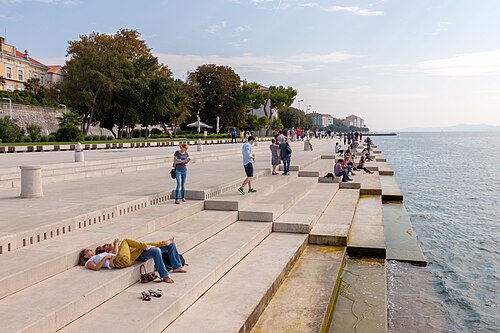
The Sea Organ uses wave motion to push air through buried resonating chambers and pipes. Each incoming swell "plays" a note or chord by compressing air into tuned cavities; the result is an ever-changing ambient organ voiced by the sea itself.
Official info and videos: Zadar Tourist Board — Sea Organ
Great Stalacpipe Organ (Luray Caverns, USA)
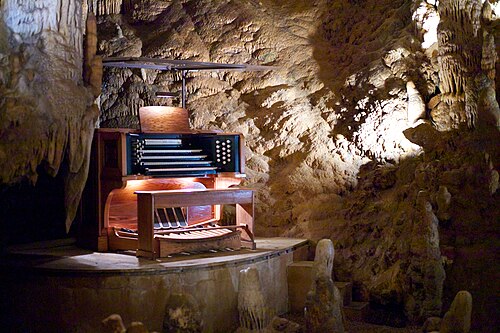
Invented by Leland W. Sprinkle in the 1950s, this console-controlled instrument connects keys to rubber-tipped mallets that strike selected stalactites. Each chosen stalactite was tuned by careful selection or trimming; when struck they ring like bells across the cave chamber, producing a uniquely cavernous timbre.
See the history: Luray Caverns — Great Stalacpipe Organ
Octobass (Gargantuan Bowed String)
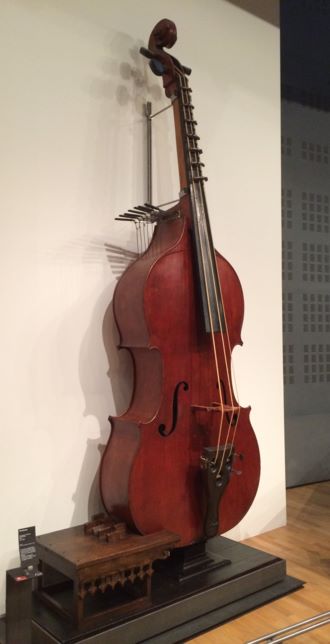
The octobass is an enormous bowed instrument (over 3 meters tall) with massive strings vibrating an octave below the double bass. Because players cannot reach the fingerboard by hand, it uses mechanical levers and clamps operated by the feet and hands to change pitch. Only a few originals exist, and it rarely appears in normal orchestral literature — but when played, it provides a seismic bottom register.
Background: Wikipedia — Octobass
Glass Armonica (Benjamin Franklin’s Invention)
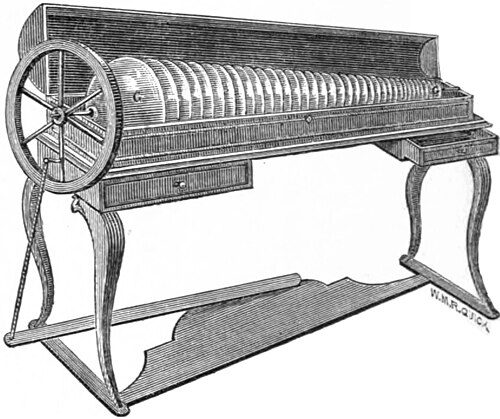
Benjamin Franklin mounted graduated glass bowls on an axle so they rotated together; touching the rims with moistened fingers creates pure, haunting tones. Popular in the 18th century (Mozart and Beethoven wrote for it), the sound later faded from mainstream use — but modern performers and museums keep it alive.
Franklin Institute & history: Franklin Institute — Glass Armonica
Additional Oddities (Short List)
Frequently Asked Questions
What exactly makes an instrument "strange"?
"Strange" usually means uncommon in mainstream music, unusual in sound-production (water, wind, fire, plasma, brainwaves), limited in number (few makers or surviving examples), or site-specific installations.
Can I hear these instruments online or in person?
Many have recorded demos and performance videos online. Several are also installed publicly or in museums.
References & Further Reading
Tags
Bizarre instruments, unusual instruments, glass armonica, stalacpipe organ, hydraulophone, pyrophone, Tesla coil music, Baschet, wheelharp, nyckelharpa, octobass, experimental music